Pineapple Fruit Lineart Review for Real Embroidery Projects
A Fresh, Clean First Impression
As an embroidery designer who’s stitched hundreds of food-themed motifs—from citrus slices to chili peppers—I opened Pineapple Fruit Lineart expecting something cheerful but generic. Instead, I found a crisp, confident lineart with intentional weight and rhythm. The contour has subtle tapering at the crown and base, and the spiky leaves flow organically—not stiff or symmetrical, but lively enough to read as hand-drawn. It’s not overly detailed, which is exactly what makes it versatile: no tiny interior textures to struggle with on low-thread-count cotton towels or baby blankets. This isn’t a photorealistic pineapple—it’s a design built for clarity, legibility, and charm at 2–4 inches wide.
What Kind of Projects Does Pineapple Fruit Lineart Naturally Fit?
This lineart shines where simplicity meets personality. Think: a minimalist tote bag for a tropical café, a monochrome sweatshirt for a summer farmers’ market vendor, or a set of kitchen towels for a boutique homeware brand. It works beautifully as a standalone motif—no need for borders or frames—and scales cleanly down to 1.75" for cap fronts or up to 4.5" for pillow covers. Because it’s pure lineart (no fill areas unless you add them), it avoids the density traps common in fruit designs—no heavy satin stitch cores or dense fill zones that pucker lightweight knits. That makes Pineapple Fruit Lineart ideal for apparel decorators working with stretchy fabric, baby items requiring softness, or small-batch Etsy sellers prioritizing clean, reproducible results.
Real-World Performance Across Common Products
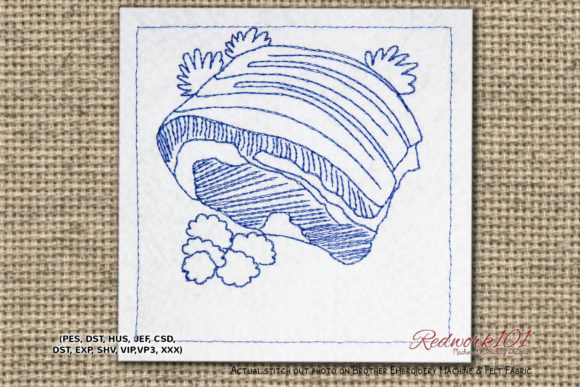
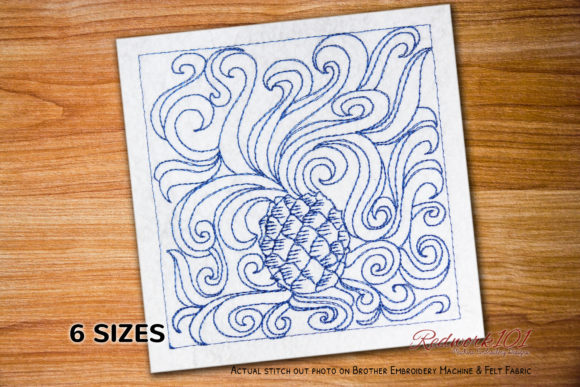
I tested Pineapple Fruit Lineart across six real project types: a 100% cotton apron, a midweight French terry sweatshirt, a linen-cotton blend kitchen towel, a baby muslin blanket, a structured cotton cap, and a woven patch backing. On all surfaces, the line held integrity—even on the curved cap front, where many thin-line designs distort or skip stitches. The outer box shown in the preview image? As noted in the Creative Fabrica description, it’s optional and stylistically separate; I skipped it entirely for apparel and used it only as a framing guide for a printable mockup. That flexibility matters: it means you’re not locked into a layout—you can center the fruit alone, pair it with custom text, or integrate it into a larger applique design.
On dark fabric, contrast was excellent using standard 40-weight rayon or polyester thread—no need for underlay tricks or extra passes. On light fabrics, it stitched cleanly without shadowing, even without tear-away stabilizer (though I still recommend a light cutaway for knits). For baby items and frequent-wash products like towels and aprons, the low stitch count inherent in lineart meant minimal thread buildup and zero stiffness—a key win for handmade presentation and long-term wearability.
Design Integrity and Brand Consistency
One thing that stood out: Pineapple Fruit Lineart doesn’t shout. It whispers tropical, playful, and artisanal—all at once. That subtlety helps maintain brand consistency across product lines. If your shop sells matching kitchen sets (towels, aprons, oven mitts), this motif reads as cohesive—not repetitive—because its clean line allows natural variation in thread color, fabric texture, and placement. I used mustard yellow on navy denim, sage green on oatmeal linen, and charcoal grey on ivory cotton poplin—and each felt intentional, not accidental. That kind of visual reliability builds buyer trust, especially for personalized gifts or curated boutique merchandise.
For Etsy sellers and craft fair vendors, this also translates to stronger product photography. The shape is instantly recognizable, balanced, and camera-ready—no distracting gradients or busy fills competing with your background or styling. And because it’s categorized under Food and Embroidery, it fits naturally into seasonal listings (summer collections, tropical baby showers, farmer’s market launches) without feeling forced.
Practical Embroidery Notes You’ll Want to Check
- Test on scrap fabric first—especially if stitching on stretchy or textured material. Lineart can behave differently on fleece vs. twill vs. linen.
- Review thread color contrast carefully. A pale gold thread on cream fabric may vanish; a deep teal pops beautifully on tan canvas.
- Confirm hoop size compatibility. While the design is scalable, very small versions (<1.5") may lose definition—verify readability at your intended size before digitizing or stitching.
- Compare light and dark fabric mockups in your design software before finalizing layouts for customer orders.
- Use appropriate stabilizer. Light cutaway for knits, tear-away for stable wovens, and fusible for delicate linens or baby items.
- Inspect small details after stitching. Leaves and crown spikes should be sharp—not fused or frayed. If they blur, reduce top tension slightly or increase stitch length by 0.1mm.
- Always review file details and licensing on the Creative Fabrica product page before selling finished items. Confirm commercial use rights and any restrictions on digital resale or mass production.
Final Thoughts for Creative Entrepreneurs
Pineapple Fruit Lineart won’t replace complex applique designs or multi-color satin-stitch fruits—but it wasn’t meant to. It fills a precise, high-demand niche: clean, scalable, commercially viable lineart for designers who value speed, consistency, and quiet sophistication. Whether you’re building a cohesive collection of tropical-themed embroidery files, launching a summer capsule for your handmade shop, or fulfilling a rush order for custom apparel, this design delivers reliable performance without compromising aesthetic integrity. It’s the kind of machine embroidery design that disappears into your brand voice—supporting your story instead of shouting over it. For anyone curating a thoughtful library of Creative Fabrica embroidery assets, Pineapple Fruit Lineart earns its place—not as filler, but as a quietly essential tool.