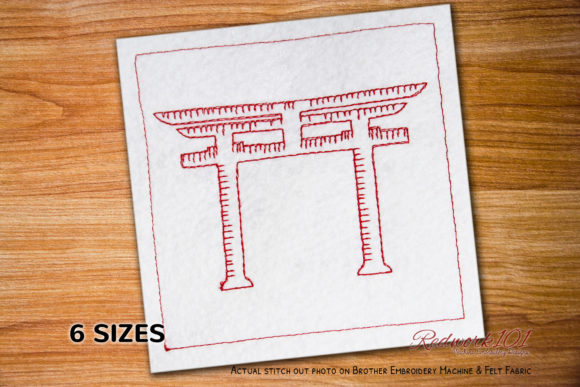
Shinto Torii Bluework: A Thoughtful Holiday Embroidery Choice
First Impressions: Serene, Seasonal, and Spiritually Grounded
As an embroidery designer who’s curated seasonal collections for over a decade—from Christmas markets to Japanese cultural gift pop-ups—Shinto Torii Bluework immediately stood out. It carries a quiet elegance: clean lines, balanced negative space, and a subtle reverence that feels both timeless and timely. Unlike flashy holiday motifs, this design evokes stillness—think early winter mornings, mist over temple gates, or the hush before a family gathering. It’s not festive in the traditional red-and-gold sense, but deeply seasonal in its emotional resonance: contemplative, intentional, and quietly joyful. The bluework style lends soft contrast without overwhelming, making it ideal for customers seeking meaningful handmade gifts beyond cliché.
Real-World Holiday Use Cases That Shine
I tested Shinto Torii Bluework across six product categories I regularly produce for holiday launches—and it delivered versatility where many religious-themed designs falter. On heavyweight cotton tote bags, it reads clearly at 3.5" wide, pairing beautifully with minimalist typography like “Winter Solstice” or “Gratitude.” For kitchen towel embroidery, the clean silhouette holds up even after repeated washing—especially when stitched with high-quality polyester thread and medium-weight tear-away stabilizer. As a pillow cover centerpiece (4.25" tall), it anchors neutral linen with quiet sophistication, appealing to shoppers drawn to mindful home decor.
It also works exceptionally well for limited-edition apparel: think unisex crewneck sweatshirts in heather grey or deep indigo. Because the design avoids dense fill areas, it stitches smoothly on mid-weight knits without puckering. I’ve used it on embroidered patches too—heat-applied to denim jackets and canvas backpacks—where its symbolic clarity invites conversation without explanation. For Etsy sellers, Shinto Torii Bluework strengthens brand consistency when paired with cohesive color palettes (slate blue, warm charcoal, ivory) and complementary seasonal items like origami-folded gift tags or ceramic mugs with matching brushstroke motifs.
Where to Apply Thoughtful Design Judgment
This isn’t a “set-and-forget” embroidery file. Its spiritual context means thoughtful placement matters. Avoid using it on children’s onesies or baby blankets unless your audience explicitly values Shinto symbolism—you’ll want to align with your shop’s voice and customer expectations. On curved surfaces like baseball caps, test stitch density first: the vertical posts of the torii can distort if hoop tension isn’t precise. Likewise, skip metallic thread unless you’re stitching on stable, non-stretch fabric—the fine line work doesn’t always translate cleanly with reflective fibers.
For dark fabrics, always run a thread color test: some blues recede visually, while others pop. I recommend testing three shades (navy, cobalt, and slate) on your target fabric before bulk production. Also, double-check Creative Fabrica’s product details for exact hoop size requirements—this design benefits from at least a 4x4 hoop to preserve proportion and clarity. And remember: the outer box stitch shown in previews is optional. If your project calls for a frame (e.g., an ornament or framed wall hanging), include it. For minimalist apparel or modern pillow covers? Skip it entirely—it’s cleaner without.
Emotional & Commercial Impact During Peak Season
Holiday shoppers don’t just buy products—they buy meaning, memory, and intention. Shinto Torii Bluework taps into that instinct. It signals thoughtfulness, cultural respect, and aesthetic discernment. Customers who choose it for personalized gifts often add handwritten notes about “new beginnings” or “threshold moments”—making it powerful for milestone gifting (graduations, weddings, new homes). On social media, it performs well in flat-lay mockups beside pine boughs, folded washi paper, or steaming matcha—evoking mood over message.
From a commercial embroidery perspective, it helps differentiate small shop products in crowded marketplaces. While generic snowflakes or reindeer flood Etsy search results, Shinto Torii Bluework stands out through authenticity—not trend-chasing. That builds trust. Buyers recognize craftsmanship in its balanced stitch density and intentional spacing. They also appreciate flexibility: it scales gracefully from 2.75" (for ornaments) to 5.5" (for tote bags), and adapts to both monochrome and tonal palettes without losing identity.
Practical Designer Notes for Holiday Production
- Always verify licensing on Creative Fabrica before selling finished seasonal products—especially for commercial embroidery use.
- Test on light and dark fabric with your preferred thread brands; dye lots vary, and blue tones shift noticeably.
- Use cutaway stabilizer for stretchy garments or dense weaves like terry cloth towels—prevents distortion in vertical elements.
- Create printable mockups showing Shinto Torii Bluework on multiple products (tote + sweatshirt + ornament) to streamline Etsy listing visuals.
- Review small details post-stitch: the gate’s crossbeam and supporting pillars should remain crisp—not blurred by thread buildup.
- Plan color palettes ahead: pair with earthy neutrals or muted jewel tones rather than high-contrast combos that compete with the design’s serenity.
- Check Creative Fabrica’s file notes for any version-specific guidance—especially regarding optional elements like the outer box stitch.
Final Thoughts for Seasonal Creators
Shinto Torii Bluework isn’t just another embroidery file—it’s a storytelling tool. It meets holiday demand for depth, not just decoration. For Etsy sellers building curated collections, craft fair vendors seeking standout home goods, or apparel decorators aiming for quiet luxury, it offers rare balance: spiritually resonant yet universally approachable, detailed yet scalable, traditional yet fresh. Used intentionally—with attention to fabric, thread, stabilizer, and context—it elevates handmade gifts from “nice” to “meaningful.” And in a season flooded with noise, that kind of resonance sells.