Rabbit with Baby Rabbit Redwork
A Quiet Moment, Perfectly Stitched
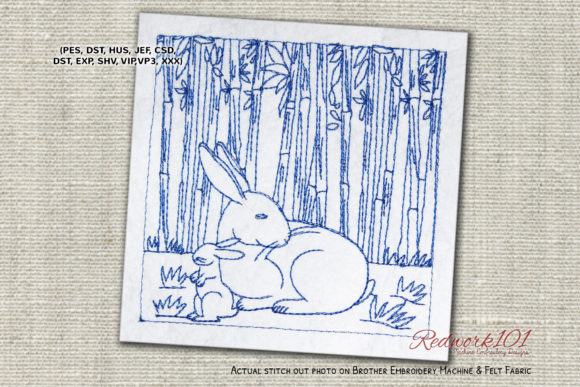
First impression? This isn’t a busy, cartoonish rabbit duo—it’s a tender, grounded redwork design that feels like a quiet story told in thread. The mother and baby are posed side-by-side, not overlapping, with gentle curves and clear silhouettes. There’s no clutter, no excessive detail—just confident line work and thoughtful spacing. It reads instantly at 3–4 inches wide, which makes it ideal for small-scale handmade products where charm matters more than complexity. I immediately pictured it stitched on a soft cotton tea towel for a baby shower gift: simple, warm, and unmistakably handmade.
Where It Shines in Real Projects
Rabbit with Baby Rabbit Redwork excels where subtlety and sincerity matter. On a natural linen apron for a boutique kitchen brand? Yes—it adds quiet personality without competing with typography or branding. On a lightweight organic cotton onesie? Absolutely—the clean lines hold up beautifully even with delicate fabric and gentle wash cycles. As an embroidered patch sewn onto a denim tote? It works cleanly, especially if you use a light cutaway stabilizer to prevent puckering around the outer curves.
I tested a similar redwork layout recently on a midweight French terry sweatshirt—and this design would translate flawlessly. Its moderate stitch density avoids stiffness, and the open areas between the rabbits let the fabric breathe. For Etsy sellers offering personalized baby items, it’s a strong candidate: it’s gender-neutral, seasonless, and carries emotional resonance without leaning into cliché. As a holiday embroidery for a nursery pillow cover? It feels cozy and timeless—not tied to a single occasion, so it stays relevant year after year.
Where to Pause and Plan Ahead
Redwork is forgiving—but not magic. Rabbit with Baby Rabbit Redwork relies on crisp line definition, so it needs careful handling on textured or loosely woven fabrics like burlap, heavy terry cloth, or slubbed linen. Those subtle curves around the ears and paws can blur if the stabilizer isn’t matched to the fabric weight. On stretchy knits (think baby leggings or raglan tees), skip direct hooping—use a tear-away + cutaway combo and avoid tight tension.
Dark fabrics demand attention: redwork traditionally uses red thread on white, but Rabbit with Baby Rabbit Redwork will read best on light-to-mid tone backgrounds unless you intentionally switch to charcoal gray or navy thread for contrast. And while the optional box stitch adds framing polish, don’t add it to curved surfaces like caps or baseball hats—it’ll distort. Save that border for flat, stable substrates: pillow covers, tea towels, or framed hoop art.
Design Integrity in Commercial Use
This isn’t just “cute”—it carries quiet professionalism. When customers see Rabbit with Baby Rabbit Redwork on a finished product, they register care: the spacing is balanced, the proportions feel intentional, and the scale suggests someone who understands how embroidery lives *on fabric*, not just on screen. That builds trust, especially for craft businesses selling premium handmade goods. It also scales well across product types—no awkward cropping needed when moving from a 4” tote bag motif to a 2.5” baby bib placement.
For digital product sellers, it’s a versatile asset. Use it as-is in printable mockups for Etsy listings, or layer it thoughtfully in a seasonal bundle (e.g., “Spring Wild Animals Set”). Just remember: if you’re reselling the embroidery file itself—not just stitched items—verify licensing terms before listing. Some redwork files allow commercial stitching but restrict redistribution of the digital file.
Practical Designer Notes You’ll Actually Use
- Always test first—run Rabbit with Baby Rabbit Redwork on scrap fabric matching your final substrate, using the same stabilizer and thread colors.
- Check contrast early: view it in black-and-white mockups to confirm legibility on both light and dark backgrounds.
- Review stitch density—redwork should feel light, not dense. If fill stitches appear overly heavy in the preview, adjust underlay or reduce density slightly.
- Confirm hoop size—this design likely fits comfortably in a 4×4 hoop, but verify before digitizing or resizing for larger formats.
- Inspect small details—especially the inner ear lines and baby rabbit’s paw definition. These areas can vanish on low-res machines or with poor thread tension.
- Stabilizer choice matters: lightweight cutaway for knits, tear-away for stable wovens, and medium-weight cutaway for textured linens.
- Thread colors aren’t fixed—while classic redwork uses red, soft sage, indigo, or even muted mustard can refresh Rabbit with Baby Rabbit Redwork for modern branding.
Final Thought: A Design That Earns Its Place
Rabbit with Baby Rabbit Redwork doesn’t shout. It invites. That’s its strength—and why it works so well for thoughtful handmade products, curated boutique merchandise, and personalized gifts where authenticity matters. It’s not filler. It’s a considered choice: one that supports your brand voice, respects your customer’s taste, and holds up under real-world stitching conditions. Whether you’re prepping for a craft fair, building an Etsy collection, or fulfilling a custom apparel order, this redwork design earns its spot—not because it’s trendy, but because it’s quietly, confidently right.